Sound
Philippe Arthuys
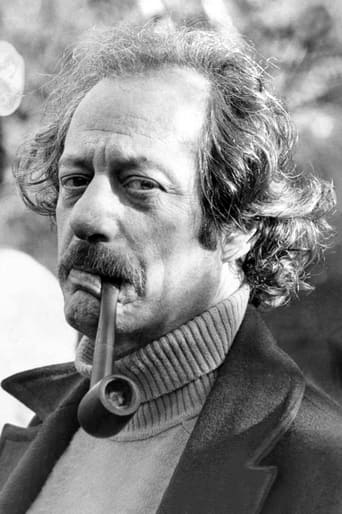
Philippe Arthuys is a composer born on November 22, 1928 in Paris, Ile-de-France, France. He died on January 6, 2010, aged 81. He is known for Le Trou, The Carabineers and Paris Belongs to Us. GloboWatch shows where to watch one of his movies and TV shows, country by country.
- Known for
- Sound
- Born
- November 22, 1928
- Place of birth
- Paris, Ile-de-France, France
- Died
- January 6, 2010
Where to watch Philippe Arthuys
Biography
Philippe Arthuys is a French musician and director born in Paris on November 22, 1928 and died on January 6, 2010 in Toulouse. He is the son of the politician and resistance fighter Jacques Arthuys, and father of the actress Sophie Arthuys, the director Bertrand Arthuys and the composer Christophe Arthuys. It was within the GRMC, with Pierre Schaeffer and Pierre Henry, that Philippe Arthuys became familiar with musique concrete. The basic principle of musique concrete consists of working the sound material directly on the recording medium, from diligent listening to the recorded elements, in accordance with the idea, which Schaeffer formulated in 1948, "that there exists another path than notation to access music.” At this period, musique concrete seems essentially intended to renew dramatic music. Arthuys' temperament adapts well to this tendency, he especially seeks the relationship of music with poetry or image, in works illustrating texts by Kipling (The Crab Who Played With The Sea, 1955) or 'Apollinaire (Le Voyeur, for a film by Henri Gruel, 1956). The liberation of spirit and technique thus found influenced the film scores he composed for Jacques Rivette (Paris nous belongs, 1961) and Jean-Luc Godard (Les Carabiniers, 1963). The collaboration between Maurice Béjart and Pierre Henry intensified, and Philippe Arthuys specialized in composing film scores, which exasperated Pierre Schaeffer. Noting that they devoted themselves more to composition than to research, he ended up forcing them to resign from the Group. It will be the end of the avant-garde of musique concrete, and the birth of GRM that we still know today. Philippe Arthuys defends the idea that musical treatment must be understood beyond its function of reinforcing the story. According to him, the musical must remain “outside the film”: “The new procedures claim a higher degree of abstraction, a greater complexity. In reaction, in struggle with the images, its action aiming to exhibit, even to determine the filmic structure, the musical enters into its relationship of heterogeneity with the visual discourse. He then wrote numerous film scores, among others: Les Camisards (1970) and Rude Journee Pour La Reine (1973) by René Allio, Le Vent Des Aurès (1966), Chronique Des Années De Draise (Palme d'or at the Festival from Cannes in 1975), Wind of Sand (1982) and the Last Image (1986) by Mohammed Lakhdar-Hamina. Arthuys will also compose music for theater, circus and dance. In particular, he wrote the music for Voilà L'Homme (1956), a ballet by Maurice Béjart based on an argument by Jacques Prévert. Alongside his career as a composer, he is moving towards directing. He worked as an assistant director on Vanina Vanini by Roberto Rossellini then directed numerous films, notably directing Françoise Prévost in La Cage De Verre (co-director: Jean-Louis Levi-Alvarès, 1965), about the Jewish holocaust; Jean Vilar in Des Christs Par Milliers (1969), on the violence of the world; Jean Négroni in Noces De Sève (1979), anti-nuclear parable.
Filmography
- 1995The UnlovedMusic
- 1986Last ImageMusic
- 1979Noces de Sèveas Le vieux Lucien · Writer · Director
- 1973Rough Day For a QueenMusic
- 1973DecemberMusic
- 1972The French CalvinistsMusic
- 1970Opium and the StickMusic
- 1969God Chose ParisDirector
- 1969Christs in the ThousandsDirector
- 1965The Glass CageWriter · Director
- 1964La prima donna
- 1963The CarabineersMusic
- 1963La Demoiselle de CoeurWriter · Director
- 1961Paris Belongs to UsMusic
- 1961Viva l'Italia!as Alexandre Dumas
- 1960Le TrouMusic
- 1960India: Matri BhumiMusic